Tuesday, September 29, 2020

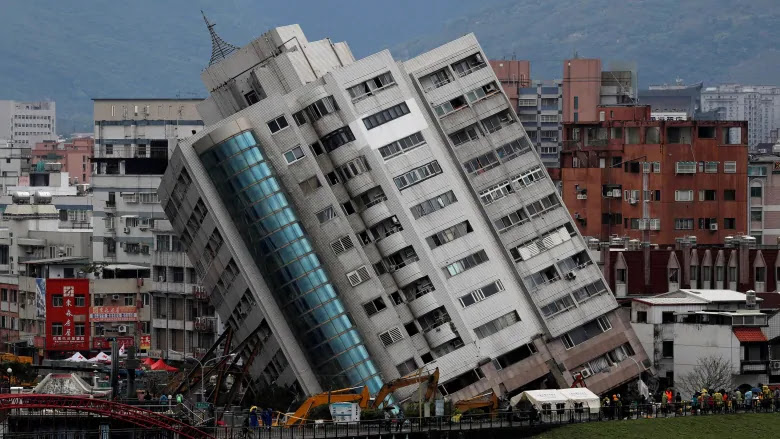
CAUSES OF FOUNDATIONS FAILURE

 The foundations may fail due to the following reasons:

  1. Unequal settlements of sub-soil.
  2. Unequal settlements of masonry.
  3. Lateral pressure on the wall.
  4. Lateral movement of the sub-soil.
  5. Sub-soil moisture movement.
  6. Atmospheric action.
  7. Weathering of sub-soil due to plants.

1. Unequal Settlements of Sub-soil

Unequal settlements of sub-soil is a major causes leads to foundation failure because it leads to cracks in the structural components and rotation thereof.Unequal settlement of sub-soil may be due to:
  • Eccentric loading.
  • Unequal load distribution on the soil strata.
  • Non-uniform nature of sub-soil throughout the foundation.

2. Unequal settlements of masonry

The portion of masonry situated between the ground level and concrete footing has mortar joints which may either shrink or compress, leading to unequal settlement of masonry.Due to this the super structure will also have cracks which leads to unequal settlements of masonry.

3. Lateral Pressure on the Wall

The wall transmitting the load to the foundation may be subjected to lateral pressure from a pitched roof or an arch or wind action.Due to this, the foundation will subjected to a moment .If the foundation has not been designed for such a situation it may fail by either overturning or by generation of tensile stresses on one side and high compressive stresses on the other side of the footing.

4. Lateral Movement of Sub-soil

Lateral movement of sub-soil is applicable to very soft soil which are liable to move out or squeeze out laterally under vertical loads specially at the locations where the ground is sloping.Such a situation may arise in granular soils where a big pit is excavated in the near vicinity of the foundations.Due to such movement excessive settlements takes place or structure may even collapse. 

5. Sub-soil Moisture Movement

Sub-soil moisture movement is a major causes of failure of foundation on cohesive soil, where the sub-soil water level fluctuates.When water table drops down, shrinkage of sub-soil takes place.Due to this there is a lack of sub-soil support to the footing which leads to cracks in the buildings.

6. Atmospheric Action

The behaviour of foundation may be adversely affected due to atmospheric agents such as sun, wind and rains.If the depth of foundation is shallow, moisture movements due to rains or drought may cause trouble.If the building lies in a low lying area, foundation may even be scoured.If the water remains stagnant near the foundation it will remains constantly damp resulting in the decrease in the strength of footing or foundation wall.

7. Weathering of Sub-soil due to Plants

Sometime plants like small trees, shrubs is grown very near to the wall.The roots of these shrubs absorb moisture from the foundation soil, resulting in reduction of their voids and even weathering.Due to this the ground near the wall depresses down.If the roots penetrates below the level of footing, settlements may increase resulting in foundation cracks.

Sunday, September 27, 2020

METHOD OF IMPROVING BEARING CAPACITY OF SOIL

Safe Bearing Capacity of Soil

Safe bearing pressure of soil is so low that the dimension of the footings work out to be very large and uneconomical.In such circumstance, it become essential to improve the safe bearing pressure, which can be done by the following methods:
  1. Increase the depth of foundation
  2. Compaction of soil
  3. Drainage of soil
  4. Confining the soil
  5. Grouting
  6. Chemical treatment
  7. Replacing poor soil


1. Increase The Depth Of Foundation

It has been found that in cohesionless soil, the bearing capacity increases with the depth due to the confining weight of overlaying materials.At deeper depths the over budden pressure on soil is higher hence the soil is more compacted at deeper depth.This method is not economical because the cost of construction increases with increase in the depth.The method is useful only when better bearing stratum is encountered at greater depth.

2. Compaction Of Soil

It has been found that compaction of natural soil deposits or man-made fills result in the improvement of bearing capacity and reduction in the resulting settlements.Compaction of soil can be effectively achieved by the following mean:

A. Ramming Moist Soil
In this method  the foundation soil is moistened and then compacted with the help of hand rammer or mechanically operated frog rammers or vibratory rollers.The voids of the soil are very much reduced resulting in the reduction in settlements.


B. Flooding The Soil
In this method the bearing pressure of very loose sands can be increased by flooding the soil.This method is adopted to improve the bearing capacity of the soil especially sand dunes.

C. Vibration
Heavy vibratory rollers and compactors may compact the layer of granular soils to a depth of 1 to 3 m with this method the sandy soil can be effectively compacted, resulting in increased safe bearing power and decreased settlements when super-structure loads come on the soil.


D. Vibroflotation
Vibroflotation is a commercial method which combines the effect of vibration and jetting.A heavy cylinder vibroflot is inserted in the soil  while the cylinder vibrates due to a rotary eccentric weight.A water jet on the tip of the vibro flot supplies a large amount of water under pressure.As the vibro flot sinks, clean sand is added into a crater that develops on the surface. The method is very useful when foundation is required to support heavy loads spread over a greater area.

    
E. Compaction by Pre-Loading
This method is adopted where footing is founded on clayey soils which result in long term settlements.Pre-loading results in accelerated consolidation, so that settlements are achieved well before the actual footing is laid.The load used for this process is removed before the construction of the footing.

F. Using sand Piles
This method is adopted for sandy soils or soft soil because this is very useful for such soils.In this method hollow pipes are driven in the ground at close interval which results in compaction of  soil enclosed between the adjacent pipes.After that these pipes are removed and then sands are filled and ramming in these holes results in the formation of sand piles.

G. Rubble Compaction into the Soil
Rubble compaction into the soil is also a effective method of increasing the bearing capacity of soil.In this method, a layer of rubber 300 to 450 mm thickness is spread over the foundation level and rammed well.After ramming if this layer of rubble gets buried in the soil and another layer of 150 mm thickness is spread and rammed manually.


3. Confining The Soil.

In this method, the soil are enclosed with the help of sheet piles.This confined soil is further compacted to get more strength.This method is applicable for shallow foundations.


4. Drainage of Soil.

With the increase in percentage of water content in soil, the bearing capacity decreases especially when it is saturated.In case of sandy soil, the bearing capacity may reduce as much as 50% due to pressure of water content.Cohesionless soils can be drained by laying the porous pipes to a gentle slope over a bed of sand and filling the trenches above the pipes with loose boulders.These trenches subsequently should lead to the nearest well or any water body.

5. Grouting

This method is useful in loose gravels and fissured strata.Bores holes in sufficient numbers are driven in the ground and cement grout is forced through these under pressure.In this method, poor soil bearing stata is hardened by injecting the cement grout under pressure, because it scale off cracks, voids and fissures of the stata are thus filled with the grout, resulting in the increase in the bearing value.


6. Chemical Treatment

This method is adopted to increase the bearing capacity of soil with the help of certain chemicals in place of cement grout like silicates of soda and calcium chloride.These chemicals are injected with pressure into the soil.The chemical should be such that it can solidify and gain early strength.

7. Replacing the Poor Soil 

In this method the poor soil is first removed and then the gap is filled up by superior material such as sand, stone, gravel or other hard material.In order to do this, excavate a foundation trench of about 1.5 m deep and then fill the hard material is stage of 30 cm.Then compact the hard material at every stage.This method is useful for foundation in black cotton soils.

Friday, September 25, 2020

FACTORS INFLUENCING BEARING CAPACITY OF SOIL

Bearing Capacity of Soil

The bearing capacity of soil is the ability of soil to safely carry the pressure placed on the soil from any engineered structure without undergoing a shear failure with accompanying large settlements.Bearing capacity of soil is influenced by many factors which are load related or non-load related factors that is why during the design of structure bearing capacity of soil need to be considered.

Following are the factors influencing bearing capacity of soil:
  1. Soil Strength
  2. Width of foundation
  3. Depth of foundation
  4. Soil weight and surcharge
  5. Spacing Between Foundation
  6. Subsurface Voids
  7. Frost Action
  8. Soil Reinforcement
  9. Soil Erosion
  10. Earthquake

1. Soil Strength 

Bearing capacity of cohesionless soil and mixed soil increases unproportionally with the increase of in the effective friction angle.However bearing capacity of cohesive soil varies linearly with the soil cohesion provided that the effective friction angle is zero.


2. Width of Foundation

Width of foundation affects bearing of cohesionless soil.The bearing capacity of a footing placed at the surface of cohesionless soil, where the soil shear strength is considerably dependent on internal friction, is proportional to the width of the foundation.


3. Depth of Foundation

Depth of foundation influence the bearing capacity of soil,This because if the bearing capacity is high depth of foundation is more.This is specifically obvious in a uniform cohesionless soil.


4. Soil Weight and Surcharge

The contribution of subsurface soil, which are influenced by water table to the bearing capacity cannot be ignored.The water table should not be above the base of the foundation to avoid construction, seepage and uplift problems.


5. Spacing Between Foundation

The minimum horizontal distance between the two foundations should be at least equal to the width of the wider one.The minimum spacing between the foundation should be 1.5 times foundation width, during the design of foundation in order to avoid reduction in bearing capacity.


6. Subsurface Voids

Bearing capacity of soil decreases due to subsurface voids which are within a critical depth beneath the foundation.The critical depth is that depth below which the influence of pressure in the soil from the foundation is negligible.


7. Frost Action

Frost heave in certain soils in contact with water and subject to freezing temperature or loss of strength of frozen soil upon thawing can alter bearing capacity over time.Low cohesion materials containing a high percentage of silt-sized particle are mostly susceptible to frost action.


8. Soil Reinforcement

Soil reinforcement is a technique used to improve the stiffness and strength of soil to resist more load.This method is adopted where the soil stata is weak and soil is susceptible.Bearing capacity of soft or weak soil can be increased greatly by installing various forms of reinforcement in the soil like metal ties, strips or grids geotextile fabrics or granular materials.


9. Soil Erosion

Erosion of soil around and under foundations are seepage can reduce bearing capacity and can cause foundation failure.


10. Earthquake

Repeated movements could increase pore pressure in foundation soil and consequently bearing capacity is decrease.Sources of cyclic movements are earthquakes, vibrating machinery, blasting and pile driving.The foundation soil can liquify when the effective stress of soil is reduced to essentially zero.This may be initiated by either monotonic loading or cyclic loading.

Wednesday, September 23, 2020

FACTORS AFFECTING PERMEABILITY OF SOIL

Permeability Of Soil

The property of the soil by which soil permits the flow of water through it is called permeability of soil.There are voids in the soil which are interconnected to each other, provides the path for the flow of water through it.A soil with high porosity has high permeability.A soil with smaller value of permeability is categorized as impervious. 

Coefficient of permeability is derived from the comparison of poiseuille's law with Darcy's law:
                                        
                      k = C. D e/(1+e). Yw 
                                                                  µ  

Where,
            k  = Coefficient of permeability
            C = Shape constant
            D = Effective grain size
            e  = Void ratio
        Yw  = Unit weight of water
          µ  = Dynamic viscosity of water                                    


Factors that Affect Soil Permeability

  1. Size of soil particle
  2. Shape of soil particle
  3. Specific surface area of soil particle
  4. Void ratio
  5. Soil structure
  6. Degree saturation
  7. Water properties
  8. Temperature
  9. Adsorbed water
  10. Organic matter


1. Size of Soil Particle

Permeability varies according to size of soil particle.Fine particles of soil is smaller than 0.002 mm in diameter where as coarse grained soil particles size are 0.05 to 2.0 mm in diameter.Permeability is high in coarse grained soil and permeability is low in fine grained soil.The relation between coefficient of permeability (k) and particle size (D) can be shown in an equation as;

                             k ∝ D2

2. Shape of Soil Particle

Permeability varies according to shape of soil particle.Rounded particles will have more permeability than angular shaped.It is due to specific area of angular particle is more compared to rounded particles.


3. Specific Surface Area of Particle

Specific surface area of soil particle also effects the permeability.Higher the specific surface area lower will be the permeability.

                       k  ∝                 1                           
                               Specific Surface Area

4. Void Ratio

Void ratio is the ratio of the volume of voids in a soil to volume of solids.The void ratio is thus a ratio which can be greater than 1. It can be expressed as a fraction.The coefficient of permeability varies with void ratio.Permeability increases with void ratio and it is not applicable for all types of soils.Based on other concept it has been established that the permeability of a soil varies as;

                                   e2 or e2/(1+e)                                        

5. Soil Structure

Soil structure affects permeability. Permeability in the direction of stratification is high as compared to the permeability perpendicular to stratification.If the soil contains dispersed structure, the particles are in face to face orientation hence, permeability is very low.The permeability of stratified soil deposits also varies according to the flow direction.If the flow is parallel permeability is more.If it is perpendicular permeability is less.


6. Degree of Saturation

If the soil is not fully saturated, it contains air pockets.The permeability is reduced due to the presence of air which causes a blockage to the passage of water.Consequently, the permeability of a partially saturated soil is considerably smaller than of fully saturated soil.Fully saturated soil is more permeable than partially saturated soil. 


7. Water Properties

Various properties of water or fluid such as unit weight and viscosity also effects the permeability because permeability is directly proportional to unit weight of water and inversely proportional to viscosity of water.
                            ∝    Yw  
                                       µ  


8. Temperature

Temperature also affects permeability of soil. Permeability is inversely proportional to the viscosity of the fluid.It is known that viscosity varies inversely to the temperature.Hence, permeability is directly related to temperature.Greater the temperature, higher will be the permeability.

                              ∝   1    ∝ temperature
                                      µ  

9. Adsorbed Water

Adsorbed water is the water layer formed around the soil particle especially in the case of fine-grained soils.This reduces the size of the void space by about 10%.


10. Organic Matter

Organic matter block the passage of water through soil.Hence permeability considerably decreases.In permeability tests, the sample of soil used should be fully saturated to avoid errors.

Tuesday, September 22, 2020

HOW SOIL IS FORMED

Orgin Of Soil

Soil are formed by weathering of rocks due to mechanical disintegration or chemical decomposition.When a rock get exposed to atmosphere over a significant time,it decomposes into small particles and these particle are formed as soil.


FORMATION OF SOIL:

  • Physical Disintegration 
  • Chemical Decomposition of rock

PHYSICAL DISINTEGRATION

1.Temperature Change: Different minerals of rock have different coefficients of thermal expansion.Temperature fluctuations cause expansion and contraction of the rock due to these changes stresses induced and the particles get detached from the rock and the soil are formed.

2.Wedging action of Ice: When water present in minute pores and cracks of rocks, during cold climates these water gets frozen.If the volume of ice formed is more than of water expansion occurs.
Rock get broken into pieces when large stresses develop in the cracks due to wedging action of the ice formed.

3.Spreading of roots of plants: As the roots of tree grow in the cracks and hole of the rocks,force acts on the rock.The segments of the rock are forced apart and disintegration of rocks occurs.

4.Abrasion: As water,wind and glaciers move over the surface of rock,abrasion and scouring takes place.It results in the formation of soil.


CHEMICAL DECOMPOSITION

1.  Hydration: Hydration is the inclusion of water in a mineral structure,causing it to swell and leaving it stressed and easily decomposed.

2.  Carbonation: It is a type of chemical decomposition in which carbon dioxide in the atmosphere combines with water to form carbonic acid.The carbonic acid react chemically with rocks and causes their decomposition.

3.  Oxidation: Oxidation occurs when oxygen ions combine with minerals of rocks.Oxidation results in decomposition of rocks.Oxidation of rocks is somewhat similar to rusting of steel.
 
4.  Solution: Some of the rock minerals from a solution with water when they get dissolved in water and soil are formed.

5.  Hydrolysis: It is a chemical process in which water gets dissociated into H+ and OH- ions.The hydrogen cation replace the metallic ions such as calcium,sodium and potassium in rock minerals and soils are formed with a new chemical decomposition.


TRANSPORTATION OF SOIL
  • Water transported soil
  • Wind transported soil
  • Glacier-Deposited soil
  • Gravity-Deposited soil
  • Soil transported by combined action

MAJOR SOIL DEPOSITS OF INDIA

1. Alluvial Deposite: A large part of north India is covered by alluvial deposits.The characterstics of alluvial deposits is the existence of alternate layers of sand,silt and clay.

2. Black Cotton Soils: A large part of central India and a portion of South India is covered with black cotton soil.These soils are residual deposits formed from basalt or trap rocks.

3. Lateritic Soil: Lateritic soils are formed by decomposition of rock,removal of bases and silica and accumulation of iron oxide and aluminium oxide.

4. Desert Soil: A large part of Rajasthan and adjoining states is covered with sand dunes.Dune sand is uniform in gradation.The size of particles is in the range of fine sand. This sand is non-plastic and highly pervious.

5. Marine Deposite: Marine deposite are mainly found in the South-West coast of India.These soil are thick layers of sand above deep deposits of soft marine clays.They contain a large amount of organic matter.The marine clays are soft and highly plastic.

What is a Diaphragm Wall?

  What is a Diaphragm Wall?  A diaphragm wall acts as the backbone of deep excavations. It is a strong, reinforced concrete wall constructed...